PhD Thesis
Towards the Conception of GNSS Networks Based on Small Satellites
My doctoral research investigated the feasibility of deploying Global Navigation Satellite System (GNSS) networks using constellations of small satellites operating in Low Earth Orbit (LEO). The work explores an alternative approach to conventional navigation systems by leveraging CubeSat technologies to reduce deployment costs while increasing flexibility and enabling regional or global positioning services.
The research encompasses the complete conception of a LEO-based GNSS network, including constellation design, orbital analysis, coverage simulations, communication system evaluation, payload architecture, satellite subsystem definition, and mission engineering. Particular attention was given to the integration of emerging technologies such as Chip-Scale Atomic Clocks (CSACs) for precise onboard timing and Long Range–Frequency Hopping Spread Spectrum (LR-FHSS) modulation for the transmission of navigation signals.
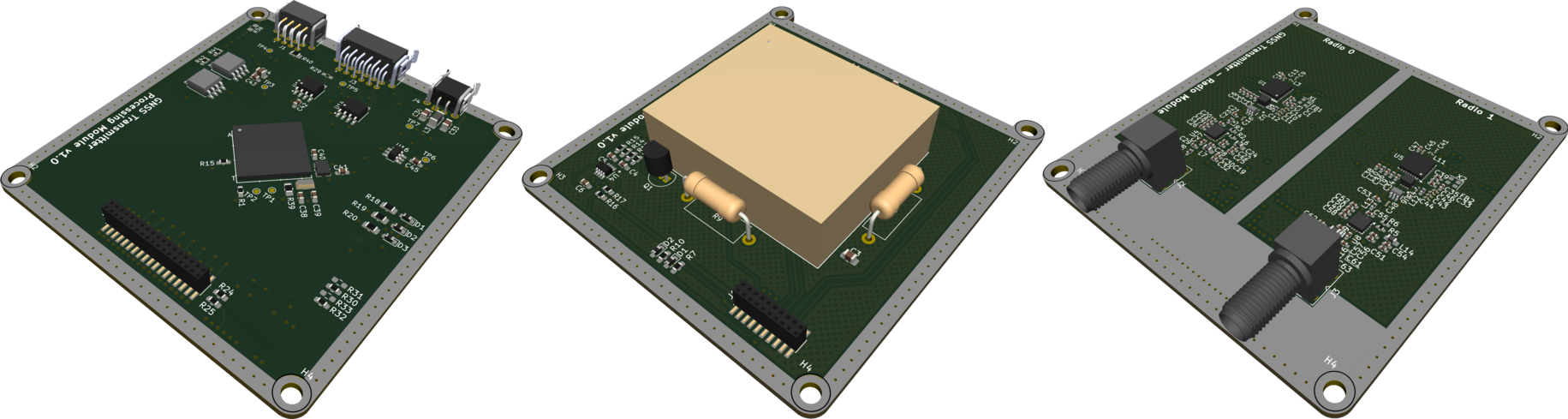
As a proof of concept, the thesis proposes the design of a dedicated GNSS payload for CubeSat platforms, including its electronic architecture, clock reference subsystem, radio module, radiation protection strategies, thermal design, and power budget. The work also evaluates the required satellite platform, considering attitude control, propulsion, communication links, energy generation, and mission constraints required to support the payload in orbit.
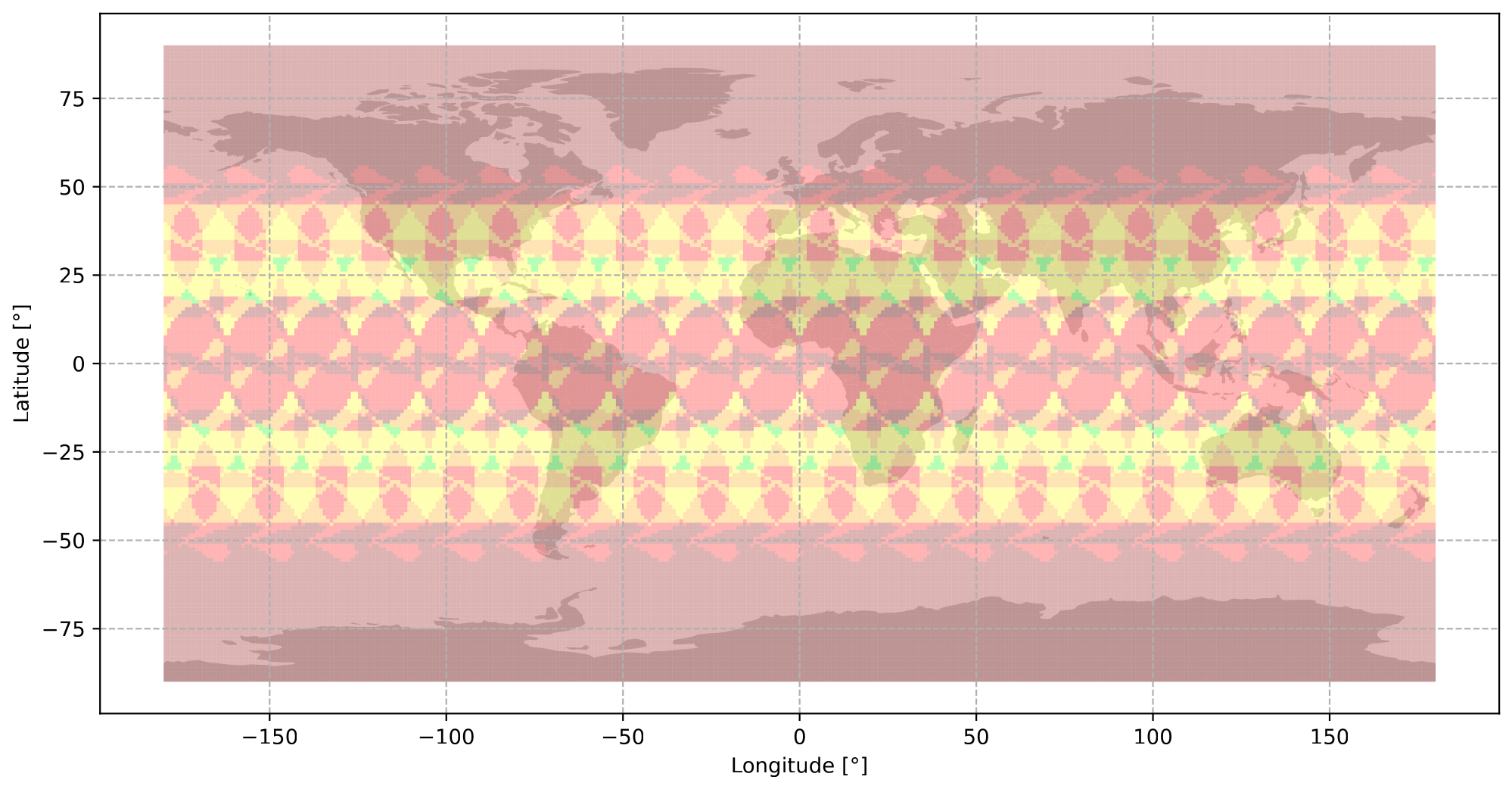
Beyond the technical implementation, the research presents extensive simulations of constellation coverage, orbital lifetime, radiation environment, power generation, communication link budgets, and deployment costs. The proposed architecture demonstrates the technical feasibility of future low-cost navigation infrastructures based on small satellites and discusses additional applications such as atmospheric radio occultation and Earth observation.
This work contributes to the fields of satellite navigation, aerospace systems engineering, embedded systems, and small satellite missions by providing a comprehensive reference architecture for future LEO-based Positioning, Navigation, and Timing (PNT) systems.
Highlights
- Proposed a complete architecture for GNSS networks based on CubeSat constellations.
- Designed and evaluated multiple LEO constellation configurations through orbital simulations.
- Developed a CubeSat payload architecture for GNSS signal generation and transmission.
- Investigated the application of Chip-Scale Atomic Clocks (CSACs) for precise onboard timing.
- Evaluated LR-FHSS as an alternative communication technique for navigation signals.
- Performed coverage, lifetime, radiation, power, thermal, communication, and cost analyses for the proposed system.
- Discussed future applications including atmospheric radio occultation and regional navigation services.
Research Areas
Satellite Navigation · GNSS · Positioning, Navigation and Timing (PNT) · CubeSats · Small Satellite Constellations · Embedded Systems · Aerospace Systems Engineering · Software-Defined Radio · Space Communications · Mission Analysis
Degree
Ph.D. in Electrical Engineering Federal University of Santa Catarina (UFSC), 2025
Advisor
Prof. Eduardo Augusto Bezerra